
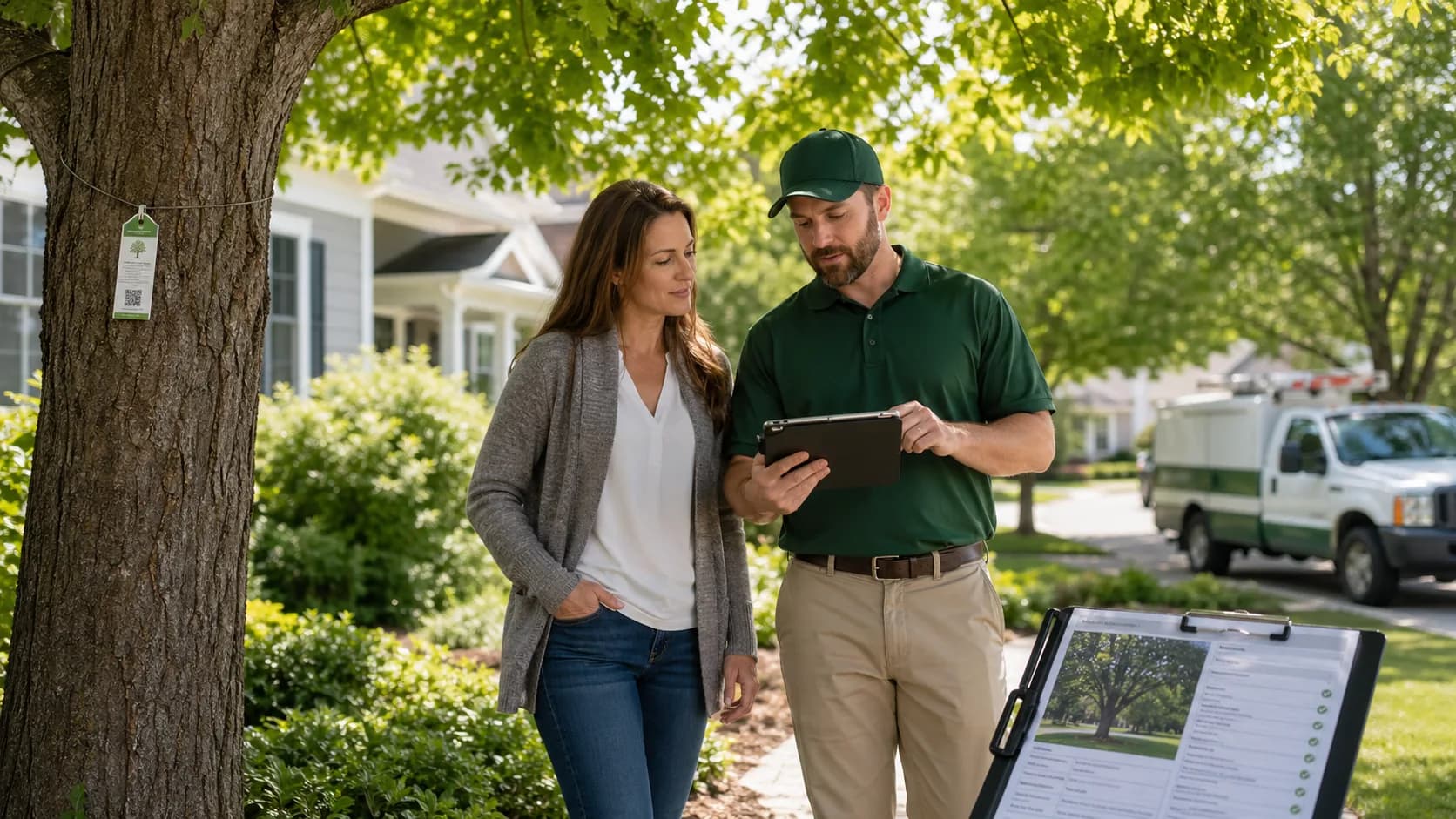
Tree care is a service business built on trust. Customers are inviting crews onto their property to handle work that can be expensive, technical, and sometimes urgent. They want the tree removed, the limbs trimmed, or the property protected, but they also want the process to feel easy, clear, and professional from start to finish.
That is where customer experience comes in.
For tree care companies, customer experience is no longer a nice bonus. It is one of the strongest ways to earn repeat business, generate referrals, and separate your company from competitors that offer similar services.
What Customer Experience Means in Tree Care
Customer experience, often called CX, is the overall impression someone has of your company after interacting with it.
It includes far more than customer service. Customer service usually refers to how your team helps someone when they have a question, concern, or problem. CX covers the full journey, including the first time someone sees your truck, visits your website, calls your office, receives an estimate, meets your crew, pays an invoice, and hears from you after the job is complete.
Every interaction shapes the way customers feel about your business.
A clean truck, a quick response, a polished proposal, a friendly crew, a clear invoice, and a thoughtful follow-up all send the same message: this company is organized, reliable, and easy to work with.
Why CX Matters for Tree Care Businesses
Tree care companies often compete in markets where customers can find multiple providers offering similar services. When the work itself feels comparable, the experience becomes the deciding factor.
A strong customer experience can help your company:
Earn Long-Term Loyalty
Customers are more likely to return when the process feels simple and professional. If a homeowner has a positive experience during a pruning job, storm cleanup, or tree removal, they are more likely to call your company again when the next need comes up.
They are also more likely to recommend you to neighbors, friends, family members, and local online groups.
Increase Revenue
Better CX can directly support growth. Faster response times, clearer proposals, smoother scheduling, and better communication can reduce friction in the sales process and help more prospects become paying customers.
Strong CX programs can increase revenue and reduce costs, making customer experience a serious business lever rather than a soft operational concept.
Reduce Customer Frustration
Many negative experiences come from gaps in communication. Customers may become frustrated when they do not know when a crew will arrive, what work is being performed, why a proposal is delayed, or how much they owe.
Improving CX helps remove those moments of uncertainty.
Stand Out From Competitors
A competitor may be able to match your pricing or offer the same services. It is harder to copy a smooth, consistent, well-managed customer journey. That makes CX a durable advantage.
Key Customer Touchpoints to Improve
To improve customer experience, tree care companies first need to understand where the experience happens. The most important touchpoints usually fall into a few core areas.
1. Marketing and First Impressions
A customer's opinion of your company may begin before they ever speak to your team.
Your website, Google Business Profile, yard signs, social media posts, uniforms, trucks, and online reviews all influence how professional your company appears.
Simple details matter. Branded shirts, clean trucks, visible phone numbers, polished jobsite signage, and consistent messaging help customers recognize and trust your business.
2. The Sales and Estimate Process
The estimate process is often where a customer decides whether to hire you.
Speed, clarity, and professionalism are critical. Customers want to know that their request was received, that someone will follow up quickly, and that the proposal will be easy to understand.
A strong sales process should make customers feel informed, respected, and confident in the recommendation.
3. Scheduling and Job Execution
Once a customer approves the work, the experience shifts to scheduling and delivery.
This is where operational discipline becomes visible. Long delays, missed arrival windows, unclear communication, or unprofessional crews can damage trust, even if the final work is done well.
Customers appreciate accurate scheduling, proactive updates, courteous crews, clean jobsites, and clear explanations of the work performed.
4. Billing and Follow-Up
The customer journey does not end when the crew leaves.
A confusing invoice, delayed payment link, or lack of follow-up can weaken an otherwise positive experience. Clear billing, fast communication, and a simple way to ask questions help close the loop professionally.
Follow-up also creates opportunities to request reviews, identify concerns, and encourage future work.
Practical Ways to Improve CX
Improving customer experience does not require a complete overhaul overnight. It starts with understanding where friction exists and making steady improvements.
Ask Canceled Customers What Went Wrong
Customers who canceled, declined a proposal, or chose another provider can offer some of the most useful feedback.
Their answers may reveal slow response times, confusing estimates, pricing concerns, scheduling delays, or communication gaps. This feedback can be uncomfortable, but it often points directly to the areas that need attention.
Listen to Your Frontline Team
Sales reps, office staff, schedulers, estimators, and crews hear customer frustrations every day.
They know where customers get confused, where delays happen, and which processes create extra work. Regularly asking your team for feedback can uncover practical improvements that leadership may not see from a distance.
Test Your Own Customer Journey
One effective way to find weak points is to experience your company the way a customer does.
Have someone submit a web form, call the office, request an estimate, review the proposal, schedule a job, and evaluate the follow-up process. Their observations can show whether your customer journey feels smooth or disjointed.
Build Clear Customer Profiles
Different customers have different priorities.
A homeowner dealing with storm damage may care most about speed. A property manager may care about documentation and predictable scheduling. A commercial client may care about compliance, safety, and recurring maintenance.
Creating customer profiles helps your team tailor the experience to the needs of each audience.
Make Proposals Faster and Easier to Understand
The proposal stage is one of the highest-impact areas to improve.
Customers should not have to wait too long, chase your team for updates, or decode technical language. A good proposal clearly explains the recommended work, the price, the timeline, and the next step.
Improving this process can help you win more jobs and reduce back-and-forth communication.
Make CX a Leadership Priority
Customer experience improves faster when leadership treats it as a core business priority.
Owners and managers should review customer feedback, monitor performance, identify bottlenecks, and empower teams to fix recurring issues. When leadership takes CX seriously, employees are more likely to do the same.
How Software Can Improve the Tree Care Customer Experience
Tree care companies often struggle with CX because the work involves many moving parts: estimates, scheduling, dispatching, crews, equipment, routes, invoices, and customer communication.
Arborist software can help connect those pieces.
Better Scheduling and Dispatching
Software can make it easier to assign crews, manage calendars, optimize routes, and respond to schedule changes.
When scheduling improves, customers benefit from shorter wait times, fewer surprises, and more reliable service windows.
Clearer Communication
Customer portals, automated updates, digital work orders, and online invoices can make the experience more transparent.
Customers want to know what is happening, when it is happening, and what they need to do next. Software can help deliver that information without relying on manual follow-up every time.
More Useful Data
The right software can also help tree care companies measure the health of their customer experience.
Metrics such as proposal turnaround time, close rate, response time, job completion time, customer retention, and review volume can reveal where the business is performing well and where improvement is needed.
Final Takeaway
Customer experience is one of the most important growth opportunities in the tree care industry.
Companies that communicate clearly, respond quickly, present professional proposals, show up reliably, perform quality work, and follow up well are more likely to earn trust and repeat business.
The best tree care companies do more than complete the job. They make the entire process easier for the customer.
That is what turns a one-time service call into a long-term relationship.